
“Put the phone down.”
“Turn off the tablet.”
“It’s bedtime.”
For many families, these phrases have become part of the nightly routine.
Screens are now woven into childhood. Children use technology for school, entertainment, communication, creativity, and social connection. For parents—and particularly healthcare professionals who understand the importance of sleep, movement, and mental wellness—it can be difficult to determine where reasonable technology use ends and unhealthy habits begin.
The solution may not be eliminating screens.
Instead, a holistic approach asks a better question:
What does this child need for their whole body and mind to thrive?
Start With Sleep, Not the Screen
Instead of focusing exclusively on the number of hours a child spends using technology, consider what screen use may be replacing.
Is the child getting adequate sleep?
Are they physically active?
Do they spend time outdoors?
Are they interacting face-to-face with family and friends?
Can they participate in activities without needing constant digital stimulation?
Are screens interfering with homework, responsibilities, meals, or bedtime?
Screen use doesn’t happen in isolation. It exists within a child’s larger lifestyle.
That is why the conversation about technology should also be a conversation about sleep, stress, nutrition, relationships, movement, and emotional health.
Sleep Is Foundational
Sleep supports virtually every system of the body.
For growing children and adolescents, consistent, adequate sleep is particularly important for learning, attention, emotional regulation, immune function, and overall well-being.
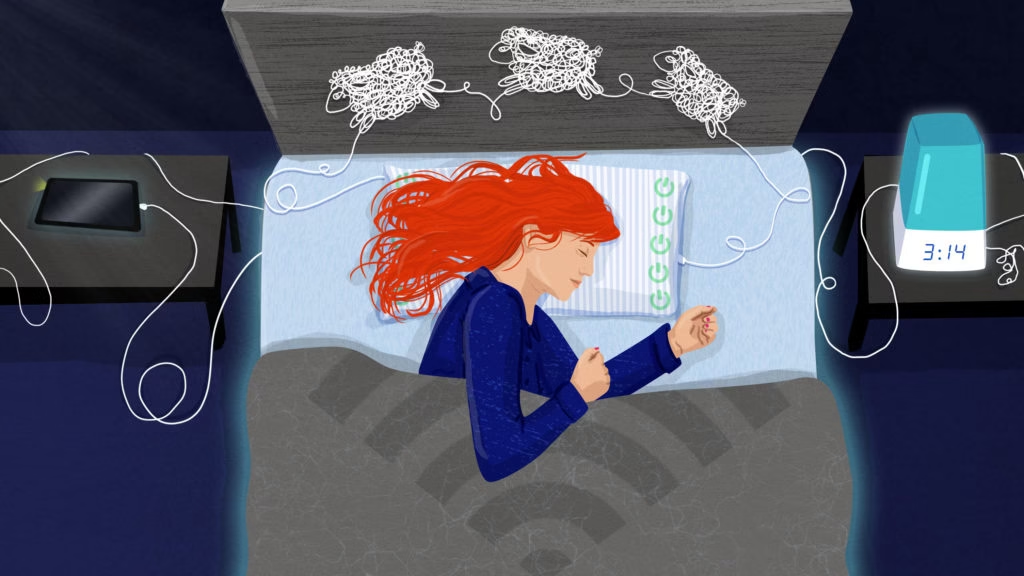
Yet bedtime is often competing with notifications, videos, games, group chats, and the endless ability to consume “just one more” piece of content.
Families can help protect sleep by creating environmental boundaries.
Consider establishing a screen-free period before bedtime, keeping devices out of bedrooms when practical, dimming household lights in the evening, and developing a consistent wind-down routine.
The goal isn’t punishment.
It’s helping the nervous system recognize that stimulation is ending and rest is beginning.
Look at the Entire Day
Holistic health encourages us to consider patterns rather than isolated behaviors.
A child who spends several hours on a computer completing schoolwork and then wants to play a video game isn’t necessarily experiencing the same situation as a child spending nearly every waking free hour consuming short-form content.
Context matters.
Instead of obsessing over one number, consider the child’s overall day.
Did they move?
Did they eat nourishing foods?
Did they connect with another person?
Did they spend time away from digital stimulation?
Did they sleep adequately?
Did they experience creativity, curiosity, or play?
When several of these areas consistently disappear, it may be time to reconsider the family’s technology habits.
Create Tech-Free Anchors
Completely eliminating screens is unrealistic for many modern families.
Creating predictable screen-free spaces may be much more achievable.
Dinner can become a phone-free time.
The car ride home can become a time to talk.
The bedroom can become a place primarily associated with sleep.
A family walk can provide movement and conversation.
These small “anchors” create regular opportunities for the brain and body to disengage from constant stimulation.
Importantly, adults should participate too.
It’s difficult to convince children that dinner is screen-free while a parent’s phone remains beside their plate.
Consider the Nervous System
Children today experience enormous amounts of stimulation.
School demands, extracurricular activities, social pressures, notifications, videos, games, advertising, and constant access to information can leave little opportunity for genuine quiet.
From a whole-person wellness perspective, children also need opportunities to experience lower-stimulation environments.
That might mean reading.
Drawing.
Listening to music.
Spending time outdoors.
Building something.
Talking with family.
Playing imaginatively.
Or occasionally being bored.
Boredom doesn’t always need to be fixed. Sometimes it creates the space where creativity begins.
Don’t Forget What’s Happening Behind the Screen
When screen habits suddenly change, consider why.
Excessive technology use can sometimes be less about the device itself and more about what the child is seeking—or avoiding.
Are they lonely?
Stressed?
Overwhelmed?
Having difficulty socially?
Using gaming as their primary connection with friends?
Avoiding something happening at school?
Technology can sometimes become a coping mechanism. Removing the device without understanding the underlying need may not address the real issue.
This is where nurses and holistic practitioners can bring an especially valuable perspective.
We are trained to look beyond symptoms.
We should do the same with our children.
Aim for Balance, Not Perfection
There will be movie marathons.
There will be rainy Saturdays filled with video games.
There will be evenings when everyone is exhausted and the tablet buys a parent 30 minutes to make dinner.
One day doesn’t define a child’s health.
Patterns do.
A holistic approach to screen time isn’t about creating fear around technology. It’s about protecting the things children’s developing bodies and minds also need: sleep, movement, nutrition, connection, creativity, outdoor time, emotional safety, and rest.
Rather than asking only, “How many hours did my child spend on a screen today?” we can ask something broader:
Did my child’s day contain the things they need to thrive?
That shift—from controlling one behavior to supporting the whole child—is where holistic wellness becomes practical.
And it may be one of the most valuable perspectives healthcare professionals can bring home to their own families.