
Artificial intelligence (AI) is no longer a futuristic concept in healthcare but a tool that is already transforming the way nurses work, communicate, and care for patients. While there are some healthcare professionals who worry that technology may replace human roles, the reality may be much different. AI is becoming a powerful tool that helps nurses provide safer, more efficient, and more personalized care while reducing administrative burdens and improving patient outcomes.As nursing continues to evolve, understanding how AI is shaping the profession is essential for both current and future nurses.
AI Is Helping Nurses Spend More Time with Patients
One of the biggest challenges nurses face is balancing patient care with documentation, charting, and administrative responsibilities. Studies show that nurses spend a significant portion of their shifts completing paperwork and entering information into electronic health records.
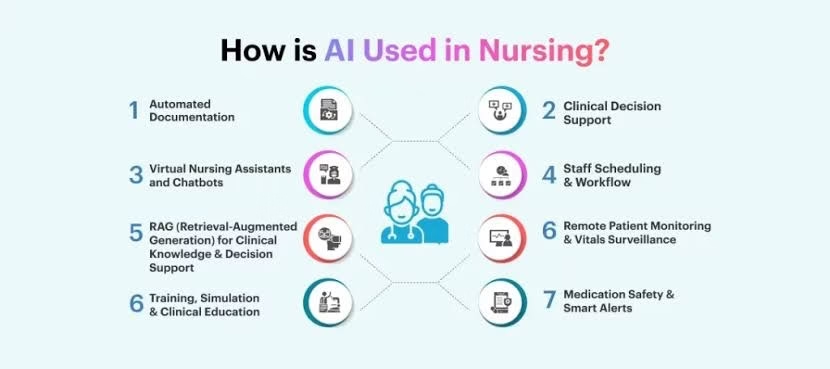
AI-powered systems are helping reduce this burden by automating documentation tasks. Voice recognition software, natural language processing, and intelligent charting tools can record patient interactions, organize information, and populate electronic records more efficiently. This allows nurses to spend less time behind a computer and more time at the bedside providing direct patient care. Rather than replacing nurses, AI is giving them back one of their most valuable resources: time.
Improving Clinical Decision-Making
Nurses are constantly making decisions based on patient data, symptoms, medical histories, and changing conditions. AI systems can analyze vast amounts of healthcare data much faster than humans, identifying patterns and trends that may not be immediately obvious.
For example, AI-powered predictive analytics can help identify patients who are at risk for complications such as sepsis, falls, or hospital readmissions. These early warnings allow nurses and healthcare teams to intervene sooner, potentially preventing serious outcomes. While this is not a replacement for critical thinking skills, it can be a support tool to enhance clinical judgment.
Enhancing Remote Patient Monitoring
The rise of wearable devices, remote monitoring systems, and telehealth has expanded healthcare beyond traditional clinical settings. AI helps analyze real-time patient data collected from these technologies, allowing nurses to monitor patients even when they are at home.Changes in vital signs, medication adherence, sleep patterns, or activity levels can trigger alerts when intervention may be needed. This enables earlier detection of potential health issues and supports proactive care rather than reactive treatment. For patients managing chronic conditions such as diabetes, heart disease, or hypertension, AI-supported monitoring can improve health outcomes and reduce hospitalizations.
Challenges and Ethical Considerations
While AI offers exciting possibilities, it also raises important questions. Data privacy, algorithm bias, accuracy, and accountability remain ongoing concerns within healthcare. Nurses must understand both the benefits and limitations of AI tools to ensure they are used responsibly and ethically. Healthcare organizations must also ensure that AI systems support equitable care and do not unintentionally reinforce disparities. Nursing professionals will play a critical role in shaping how these technologies are implemented and evaluated moving forward.
Importantly, nursing leaders and professional organizations continue to emphasize that AI should support and not replace human clinical judgment, training protocols and compassionate care.
The Future of Nursing and AI
The future of nursing will likely involve increased collaboration between healthcare professionals and intelligent technologies. AI will continue to assist with documentation, workflow management, predictive analytics, patient monitoring, and education. However, the qualities that define exceptional nursing such as empathy, critical thinking, communication, advocacy, and human connection cannot be replicated by machines.
As the healthcare landscape evolves, nurses who embrace technological innovation while maintaining patient-centered care will be well-positioned to lead the profession into the future. AI is not replacing nurses. Instead, it is becoming one more tool that helps nurses do what they do best: care for people.